- el-nino
- enso
- climate-change
- global-warming
- seasonal-forecasting
What Is El Niño and Why the Science Keeps Shifting
A strong El Niño is running in 2026, and the science about whether climate change is altering the cycle is genuinely contested. Here is how to tell what the evidence supports.
6 min read
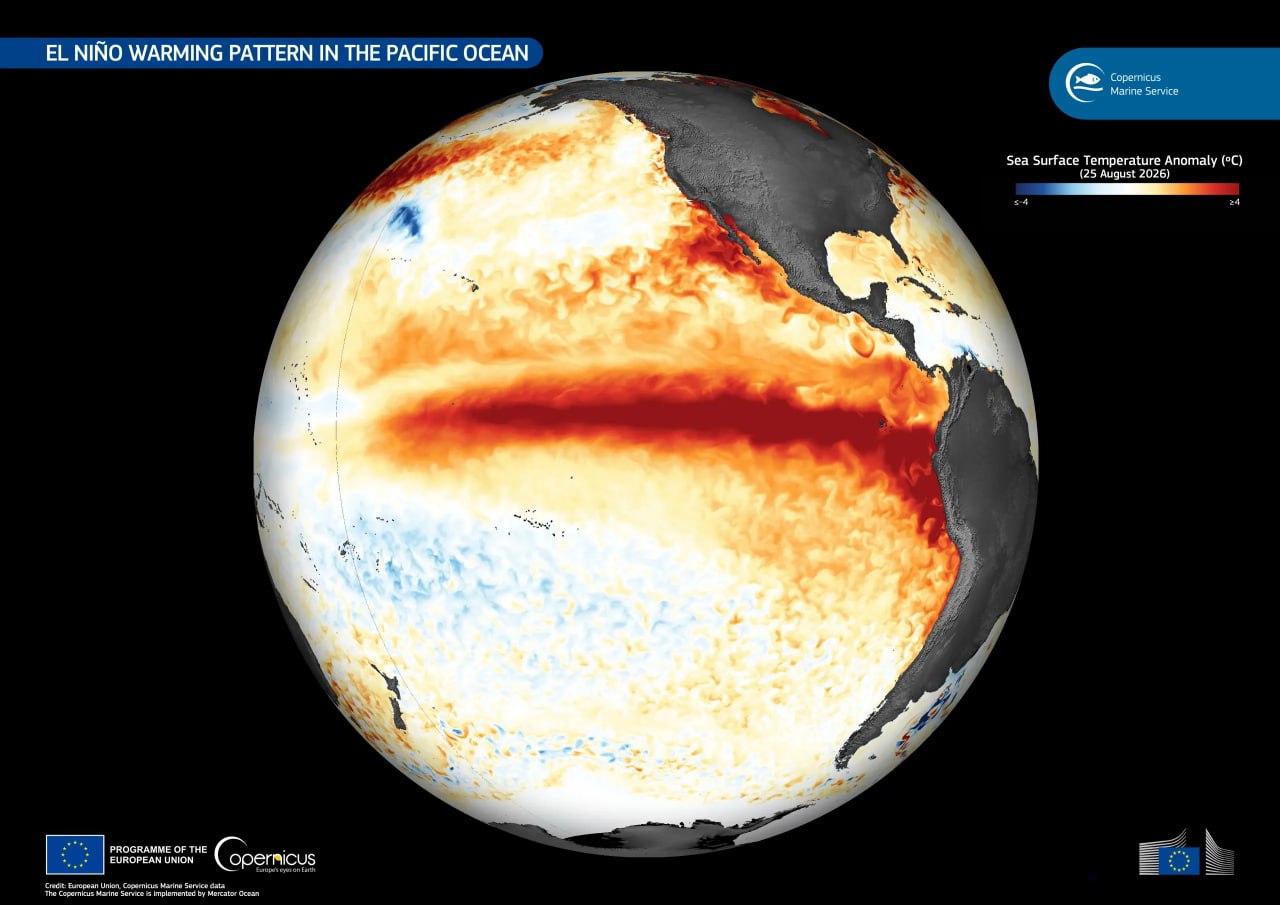
A strong El Niño is running right now, rearranging rainfall and temperature far from the tropical Pacific. Anyone who asks what is El Niño tends to get a tidy answer about the cycle and a messier one about how climate change interacts with it. Separating what the natural pattern is doing from what a warmer background is adding is an area where scientists genuinely disagree. What follows covers what is settled, what is not, and how to read the next headline.
The question, and who it affects
El Niño is the warm phase of the El Niño–Southern Oscillation (ENSO), a coupled ocean–atmosphere system in the tropical Pacific. It occurs at intervals of two to seven years and tends to last about a year, according to BBC News Mundo. What repeats is a cycle, not a slot in the calendar, so calling it an annual event is wrong.
Because the pattern reshapes temperature and rainfall well beyond the Pacific, its consequences reach food access in distant regions. The United Nations has warned that this event could leave millions of people without reliable access to food (UN post).
The current event is already significant. The World Meteorological Organization's Global Seasonal Climate Update, published on September 3, 2026, confirmed that a strong El Niño had kept intensifying steadily, and projected it would dominate global climate patterns between September and November 2026, raising the odds of above-normal temperatures across much of the planet and driving substantial changes in where rain falls (WMO). Two background factors sharpen that projection: exceptionally warm ocean temperatures worldwide, and the possibility that the Indian Ocean Dipole would enter its positive phase.
For anyone watching the news, the useful question is not what is El Niño, but how much of what is happening belongs to the cycle and how much to a changing baseline.
What to know before reading any El Niño forecast
- ENSO is the system; El Niño is one of its phases. El Niño is the warm phase, La Niña the cool counterpart. ENSO is expected to keep dominating year-to-year climate variability throughout the 21st century (Zoinet brief).
- The pattern and climate change are not the same thing. ENSO is natural climate variability, and conflating it with human-caused warming produces bad conclusions in both directions.
- A very intense event lifts global average air temperature by about 0.2 °C, because it releases stored ocean heat into the atmosphere (BBC News Mundo).
- Forecasts are probabilistic and time-boxed. The WMO update describes conditions as of September 3 and projects patterns only through September–November 2026. It does not settle what the whole event will do.
- "Strong" is measured, not felt. Classification rests on indices such as sea-surface temperatures in the Niño3.4 region of the tropical Pacific, the measure that model forecasts project forward (Carbon Brief).
- A strong global event is not a local forecast. Regional and seasonal detail decides what a given place actually gets.
Two terms worth knowing
A jet stream is a narrow band of strong wind high in the atmosphere, and El Niño can strengthen it over the Pacific. An index is a numerical measure scientists use to classify ocean or atmospheric conditions — the raw material behind labels like "strong" or "weak."
How El Niño works, and how it is changing, step by step
- Start with the system, not the headline. ENSO is a natural oscillation with worldwide impacts, shaping temperature and rainfall globally and expected to keep doing so.
- Follow the heat. An intense event dumps stored ocean heat into the atmosphere, which is why it shows up as a spike of roughly 0.2 °C in the global average air temperature.
- Follow the wind. The pattern can strengthen the jet stream over the Pacific, producing more frequent and intense storms over the western United States, especially California, and along the west coast of South America (Wikipedia). The atmosphere behaves like a zero-sum game: more rain in the Americas comes at the expense of normally rainy southern Asia and Australia, which turn abnormally dry.
- Check the rainfall signature, not only the temperature one. ENSO is expected to keep driving year-to-year precipitation variability through the 21st century, and that variability is projected to intensify as moisture availability changes (Zoinet brief).
- Ask the attribution question out loud. The WMO states there is no indication that climate change is increasing the frequency or intensity of El Niño events, while noting that extreme weather such as heatwaves and heavy rain has more energy and moisture available as air and ocean temperatures rise. That is a claim about amplification, not about the cycle itself changing.
- Weigh the newer evidence. The IPCC's 2021 assessment found that El Niño intensity, and the frequency of high-magnitude events, has increased since 1950 compared with earlier periods (Carbon Brief). Research published since points the same way: Ying et al. (2022) projected more frequent events within two decades regardless of emissions cuts, and Wang et al. (2019) found warming favors more "super" El Niños (Climate Signals).
- Locate the uncertainty precisely. Proxy records — tree rings, sediment cores — show El Niño varied widely in frequency and intensity over the past 11,000 years, which makes attributing recent changes to human-caused warming difficult. A 2017 study projected the pattern could double in frequency at 1.5 °C of warming, but that has not become a consensus; in June 2026, of 16 climate scientists interviewed by the New York Times, eight said they saw compelling evidence warming is likely increasing the intensity of events.
- Read every forecast for its window and its region. Global statements rarely transfer directly into a local outcome.
Examples
- An event unfolding now. The combination of a strengthening El Niño, exceptionally warm global oceans and a possibly positive Indian Ocean Dipole is why the WMO expected weather in many parts of the world to be shaped by the event through the September–November 2026 window.
- Momentum, not regularity. Since the 1970s, three very strong events occurred within just 25 years — 1972–1973, 1982–1983 and 1997–1998 — with periodicity that looks chaotic rather than rigorous (Divulgameteo).
- One phenomenon, opposite effects. The same event can mean more storms in California and along the South American west coast while southern Asia and Australia dry out.
- A cycle that stays in charge. ENSO is expected to keep dominating year-to-year climate variability throughout the 21st century, even while the debate about whether its intensity is changing continues.
Common mistakes and how to avoid them
- Treating it as an annual event. It recurs every two to seven years and typically lasts about a year.
- Using "El Niño" as shorthand for climate change, or claiming this specific event was caused by it. Attributing a single event requires a dedicated analysis these sources do not provide.
- Quoting an old IPCC assessment as if it were current. The Fifth Assessment Report (AR5) reported little consensus and little confidence that El Niño would generally intensify; the 2021 assessment reports increased intensity and more high-magnitude events since 1950. Always date the assessment.
- Reading "no consensus" as "nothing is known." The sources agree on something solid: a warmer ocean and atmosphere can amplify the impacts, even if the cycle itself is not clearly changing.
- Assuming a strong event guarantees a specific local outcome. Impacts are regionally and seasonally specific.
- Treating an encyclopedia entry or a social media post as the final word on a contested scientific question. The positions that matter belong to the WMO, the IPCC and peer-reviewed studies.
What to do the next time you see a headline
- Check the date and the institution behind the claim, and whether it rests on an older or a newer IPCC assessment.
- Separate the two questions: what the natural cycle is doing now, and whether the baseline it operates in is shifting.
- Look for the forecast window and the region. Global statements rarely transfer directly to a local outcome.
- Keep the WMO's seasonal updates as the reference point while this event runs through its September–November 2026 window.
Frequently asked questions
+Is El Niño an annual event?
No. El Niño occurs at intervals of roughly two to seven years and tends to last about a year, according to BBC News Mundo. The wider El Niño–Southern Oscillation cycle alternates between that warm phase and its cool counterpart, La Niña, which correspond to opposite phases of the Southern Oscillation. What repeats is a cycle, not a fixed calendar slot.
+Is climate change making El Niño stronger?
The evidence is genuinely split. The World Meteorological Organization says there is no indication climate change is increasing El Niño's frequency or intensity, though it can amplify the impacts by putting more heat and moisture into the atmosphere. The IPCC's 2021 assessment found intensity and high-magnitude events have increased since 1950. Proxy records covering 11,000 years complicate attribution.
+What does El Niño mean for the United States?
El Niño can strengthen the jet stream over the Pacific, producing more frequent and intense storms over the western United States, especially California. That extra rain comes at the expense of normally rainy southern Asia and Australia, which turn abnormally dry. Impacts remain regionally and seasonally specific, so a strong global event does not guarantee a particular local outcome.
+How long will the 2026 El Niño last?
The WMO's Global Seasonal Climate Update published on September 3, 2026 projected the event would dominate global climate patterns through September–November 2026. El Niño events typically last about a year. Those forecasts are probabilistic and limited to a defined window, so they describe likely conditions rather than guaranteed outcomes for the full event.
Sources
The claims in this article are backed by these sources:
- El fenómeno de y sus impactos asociados · zoinet.org
- El Niño / La Niña | Organización Meteorológica Mundial · wmo.int
- Los científicos dicen que el fenómeno de El Niño ya empezó y advierten de los efectos climáticos extremos que puede traer - BBC News Mundo · bbc.com
- EL NIÑO Y EL CALENTAMIENTO TÉRMICO GLOBAL. ... · divulgameteo.es
- El Niño no solo cambia el clima. También puede dejar ... · facebook.com
- El Niño (fenómeno) - Wikipedia, la enciclopedia libre · es.wikipedia.org
- Explainer: How the ‘super El Niño’ will reshape the world’s weather · interactive.carbonbrief.org
- Climate Signals | Extreme El Niño Frequency Increase · climatesignals.org