- imf
- global growth
- inflation
- trade
- artificial intelligence
IMF Global Growth Outlook: 3.1% and a Split Economy
The IMF's October outlook holds global growth at 3.1% while inflation climbs to 4.7%. The real story is the energy-price assumption that flipped between January and October.
7 min read
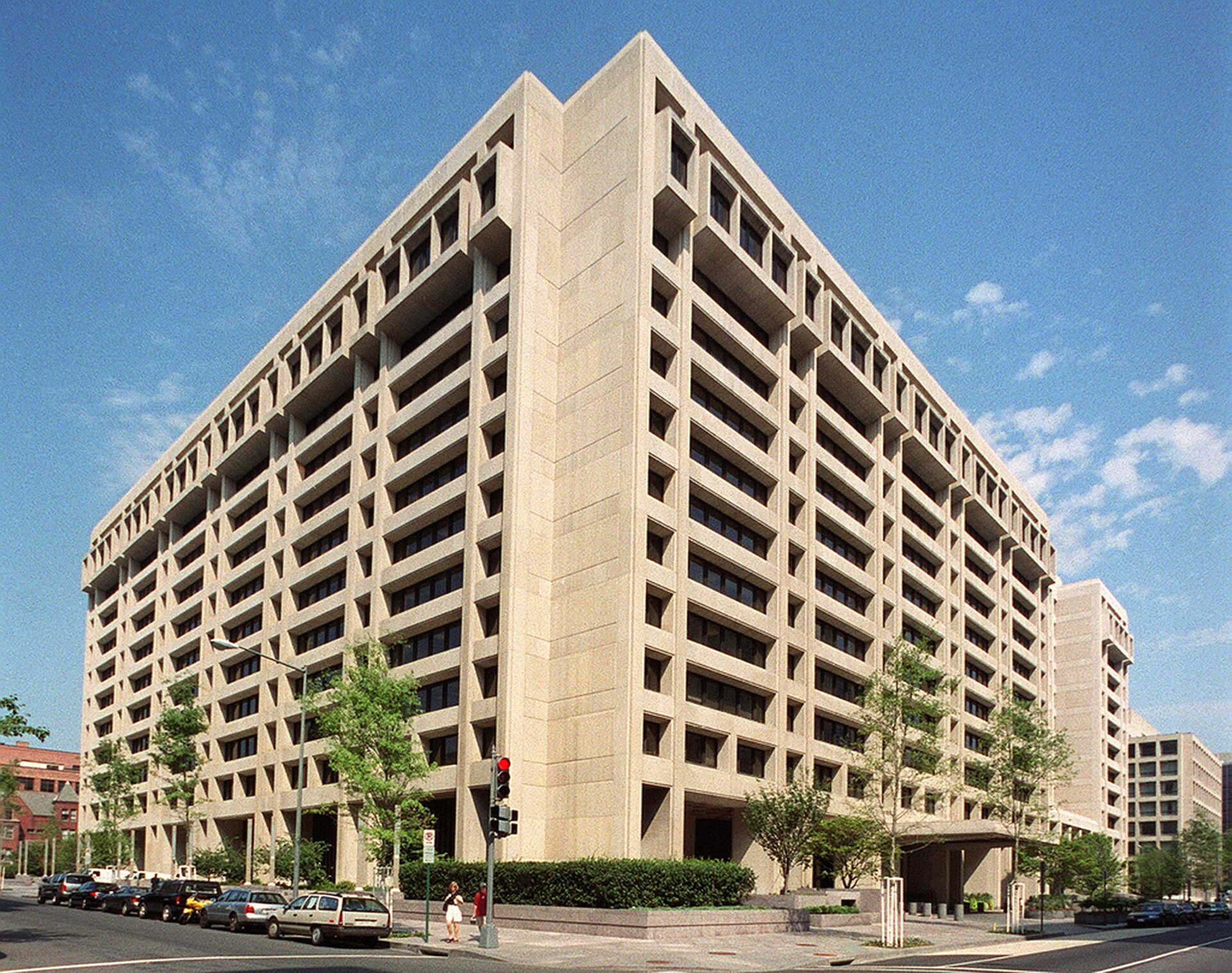
On October 13, according to coverage of the IMF and World Bank annual meetings in Bangkok, the Fund presented an outlook it titled Resiliencia bajo presión, decisiones urgentes — resilience under pressure, urgent decisions. Global growth was held at 3.1% for 2026 and raised slightly to 3.4% for 2027. Global inflation, in the same document, climbs to 4.7% this year before easing to 4.1% in 2027 (Anave).
For a report with "resilience" in its title, that pairing is awkward. An unchanged growth number is being read as proof that the war in the Middle East and two years of tariff escalation have been absorbed. An inflation number that rises to 4.7% says something else. The sources describe that rebound as temporary and driven mainly by energy and food prices; treating it as a shock still working through the economy rather than one already absorbed is this article's reading, not the Fund's. The IMF global growth outlook is not wrong. It is being asked to carry a message the rest of the document does not support.
3.1% in October, 3.1% in April, and an inflation path that moved the other way
This round put global growth at 3.1% for 2026 — a tenth of a point above the July estimate — and 3.4% for 2027, against 3.5% in 2025 (Diario Financiero). The Peterson Institute for International Economics, in projections presented at its Spring 2026 Global Economic Prospects event, expects real global GDP growth to slow from 3.3% in 2025 to 3.0% in 2026 before picking up to 3.1% in 2027 (PIIE). That round came months before October's, so the two are parallel estimates rather than simultaneous ones. Different levels, same direction, a tenth of a point apart — smaller than ordinary forecast noise.
It is worth being explicit about how these numbers reach readers. The primary October document is not among the sources used here; the figures come from press coverage of the annual meetings, and that coverage does not even agree on the framing. One outlet reported the round as a downgrade, others as a modest upgrade of a tenth of a point (Yahoo Noticias). Both readings sit on the same 3.1%.
What does hold across the coverage is a set of conditions rather than a headline. In April, the World Economic Outlook was built on the assumption of a limited conflict (IMF, April 2026). Six months later, the war it assumed would stay contained is still shaping the price path.
January expected energy prices to fall 7%. October reports oil up 41.3%
In its January update, the IMF expected energy commodity prices to fall by about 7% during 2026 — a deeper decline than it had projected in the October 2025 outlook (IMF WEO Update, January 2026). Reporting on the new outlook puts oil up 41.3% for the year, fertilizers up 10% and food up 5%, with energy, transport and insurance costs all pushing the same way (Diario Financiero). The two figures are not the same measure — January projected an energy commodity index, October reports oil specifically — so they cannot be read as a like-for-like revision of 50 percentage points. The direction, though, flipped.
That flip is a larger revision than anything in the growth column, and it is the reason the inflation forecast looks the way it does. Global inflation reaches 4.7% in 2026. In advanced economies it rises from 2.5% in 2025 to 3.1%, with 3.6% in the United States and 3.1% in the euro area. Core inflation returns to the 2% target only around mid-2028 in both cases, according to the reported figures.
A delay of that length has consequences that a growth average hides. Firms set wages and contracts against expected inflation over months, not years; households read grocery and fuel prices weekly. When the return to target slips past 2027, the energy shock stops being a line in a projection table and becomes a lived constraint on budgets and on credibility for central banks.
The April outlook attributed the pressure to a war-driven commodity shock and concentrated it in emerging market and developing economies, especially commodity importers with pre-existing vulnerabilities (IMF, April 2026). What the available sources do not do is decompose the January-to-October gap. They do not say how much is the war, how much is a tighter physical market, how much is shipping and insurance repricing risk. Without that breakdown, "temporary" describes an expectation, not a measured result.
The shock lands on energy importers, not on the technology chain
Reporting on the outlook is blunt about who pays. Countries that import energy and sit outside the technology value chain face higher import costs, currency pressure and a loss of purchasing power (Yahoo Noticias). IMF official Pierre-Olivier Gourinchas is reported to have said the Middle East and North Africa region faces a cumulative growth revision of nearly three percentage points for 2026 (UNifeed) — a figure resting on a single source, so it should be read as reported rather than confirmed.
At the other end, US growth is projected at 2.3% for 2026, below the global average, while reported inflation for the euro area stands at 3.1%. A caveat belongs here: the available October material documents this distribution thinly. The map of winners and losers can be sketched — energy and technology exporters against energy importers — but not drawn country by country, and any sharper claim would be invention.
AI is widening the gap it is credited with closing
The Diario Financiero headline on this round frames artificial intelligence as accentuating differences in growth between economies rather than levelling them — the outlet's framing, not a documented statement by the Fund. The trade data do show a mechanism at work. World trade volume growth slips from 5% in 2025 to 4.6% in 2026 before recovering to 4.7% in 2027, weighed down by tariffs and by the reconfiguration of supply chains, while technology-related trade keeps growing strongly (Forbes México, Anave). The slice of trade tied to the AI cycle is holding up the aggregate; the rest is weakening.
That same concentration is the main financial vulnerability on the Fund's list. The January update warns that a re-evaluation of AI productivity expectations could cut investment and trigger an abrupt market correction spreading from AI-linked companies to other segments and eroding household wealth (IMF, January 2026). China adds another note of divergence: the same reporting describes a slowdown in its activity.
The inference is straightforward, and it should be labelled as one: an economy whose growth engine and whose principal fragility are the same asset class is not diversified. Calling that resilience stretches the term past usefulness.
Tariffs are a policy decision inside the forecast, not weather outside it
The January projections assume a US effective tariff rate of 18.5%, compared with 18.7% in the October 2025 forecast, and a rate of 3.5% for the rest of the world, plus economic policy uncertainty that stays elevated through 2026 (IMF, January 2026). Those are choices, not conditions. Slower trade growth is attributed to tariffs and to adjustments in production chains rather than to weaker demand alone.
The distinction matters because the two shocks in this outlook have different remedies. A commodity shock is cushioned with reserves, targeted transfers and monetary patience. A tariff shock is reversed by decision. The Fund's own upside scenario reflects that asymmetry: it lists a swift resolution of the war and easing trade tensions on the same footing as faster AI adoption.
The counterargument: resilience is not a baseless description
The strongest objection deserves a hearing. A slowdown from 3.5% in 2025 to roughly 3.0-3.1% in 2026 is modest by historical standards, and both the IMF and PIIE expect a pickup afterward. That is a defensible use of the word resilience. The upside is also real rather than rhetorical: Gourinchas is reported saying that "a swift resolution of the war, productivity gains from a faster adoption of AI or easing in trade tensions could uplift the global economy." And the productive capacity behind the AI cycle is genuine, not just froth; that weakens the claim that the boom is only a fragility. Forecasting differences of a tenth of a point, meanwhile, are noise, and reading destiny into them would be overreach.
Each of those points addresses the level of growth. None of them addresses distribution or the inflation path, which is where the outlook is genuinely weaker. The upside case requires several things to go right at once; the Fund's own stated position, as reported, is that "risks are firmly to the downside, including a further escalation of the war, new trade tensions or a re-assessment of the profitability of AI investments." A forecast whose central case depends on an assumption that already failed once this year should be held to a higher evidentiary bar than a headline allows.
An average is not a plan
The sources here do not include the specific fiscal and monetary measures the IMF recommends to countries facing higher import costs and currency pressure, and that is a gap worth naming. What they do support is narrower and more useful: an average of 3.1% is a poor guide for any single country, and even the direction of travel is contested — the October IMF global growth outlook and PIIE's spring estimate sit a tenth of a point apart.
Budgets, rate calendars and social protection decisions built on the assumption that the price shock fades on schedule will lock in damage if it does not. That is not a prediction. It is what the arithmetic of a revised energy assumption implies for anyone planning past the next quarter. The question worth carrying into the next round of forecasts is not whether the world economy grows 3.1% or 3.0%. It is whether 4.7% inflation, with core prices above target until 2028, still deserves the word resilience.
Frequently asked questions
+What is the IMF's global growth forecast for 2026?
The October 2026 World Economic Outlook projects global growth of 3.1% for 2026 and 3.4% for 2027, compared with 3.5% in 2025. The 2026 figure was revised up a tenth of a point versus July. The Peterson Institute for International Economics, in projections presented at its Spring 2026 event, expects 3.0% for 2026 — a similar direction at a slightly lower level.
+Why is global inflation rising again in 2026?
Energy and food prices explain most of the rebound. Reporting on the outlook puts oil up 41.3% in 2026, fertilizers up 10% and food up 5%, with higher energy, transport and insurance costs. Global inflation reaches 4.7% in 2026 before easing to 4.1% in 2027, well above the 2% targets most central banks aim for.
+When will inflation return to 2%?
Later than most forecasts assumed a year ago. According to the reported projections, inflation in advanced economies rises to 3.1% in 2026 from 2.5% in 2025, with core inflation returning to the 2% target only around mid-2028 in both the United States and the euro area. The process is described as gradual rather than smooth.
+Which countries absorb a war-driven price shock?
The pressure concentrates on energy importers that sit outside the technology value chain, which face higher import costs, currency pressure and lost purchasing power. The Middle East and North Africa region is reported to carry a cumulative growth revision of nearly three percentage points for 2026. US growth is projected at 2.3% for 2026, below the global average.
Sources
The claims in this article are backed by these sources:
- El FMI prevé un crecimiento mundial del 3,1% en 2026 y una desaceleración del comercio - Anave · anave.es
- El FMI advierte que la IA acentúa las diferencias en el crecimiento mundial mientras la guerra reaviva la inflación | Diario Financiero · df.cl
- FMI bajó sus proyecciones del crecimiento de la economía mundial en 2026 - Yahoo Noticias · es-us.noticias.yahoo.com
- FMI mejora previsión de crecimiento de economía mundial una décima para 2026, hasta el 3.1% · forbes.com.mx
- World Economic Outlook Update, January 2026: Global Economy: Steady amid Divergent Forces; World Economic Outlook 2026/003 · imf.org
- Global economy to slow in 2026, and outlook clouded by war, other uncertainties | PIIE · piie.com
- IMF / WORLD ECONOMIC OUTLOOK | UNifeed · media.un.org
- World Economic Outlook, April 2026: Global Economy in the Shadow of War · imf.org